
When a tooth hurts or looks damaged, it can be hard to know whether extraction is necessary or whether the tooth can be saved. This article compares clear clinical signs that commonly point toward extraction with signs that usually mean your dentist can restore the tooth. You will get an urgency checklist, decision cues to discuss with your dentist, what to expect during and after an extraction, and local next steps for Scarborough residents who need same-day care.
How to use this checklist and when to act
Use the three urgency levels below to decide what to do next: urgent means call now or seek same-day care, non-urgent means book soon, and watchful means monitor and see your dentist at the next available checkup. If you have systemic signs such as fever, spreading facial swelling, trouble breathing, or uncontrolled bleeding, seek urgent medical care immediately because these can indicate a spreading infection or other emergency. Trusted sources with guidance on urgent dental symptoms include healthdirect and MedlinePlus.
Urgent signs that commonly indicate extraction is needed
- Severe, uncontrolled tooth pain that does not respond to painkillers, especially when pain worsens over hours. Severe pain can mean a deep infection or abscess that may require removal of the tooth if it cannot be treated conservatively (MedlinePlus).
- Spreading facial or jaw swelling, particularly when accompanied by fever. Swelling that spreads toward the eye, neck, or causes difficulty swallowing or breathing is a medical emergency and can require extraction or hospital care (healthdirect).
- Large dental abscess with drainage or a visible pocket of pus. An abscess that keeps returning or is large may not be saved by antibiotics alone and often leads a clinician to recommend extraction for source control (MedlinePlus).
- Severely loose tooth with advanced mobility that threatens neighbouring teeth or cannot be stabilised. Advanced gum disease can destroy supporting bone and make extraction the safest option (MedlinePlus).
- Acute fracture where a tooth is broken below the gumline or the remaining tooth structure is insufficient to restore. When the tooth cannot be rebuilt predictably, removal can reduce risk to adjacent teeth and tissues (WebMD).
If you recognise any of the above urgent signs, call your dental clinic or an emergency number now. SR Smile Care provides emergency dental care and can advise same-day options for Scarborough residents; see the clinic extraction page for details teeth extractions and the main site at SR Smile Care.
Non-urgent signs that often lead clinicians to recommend extraction
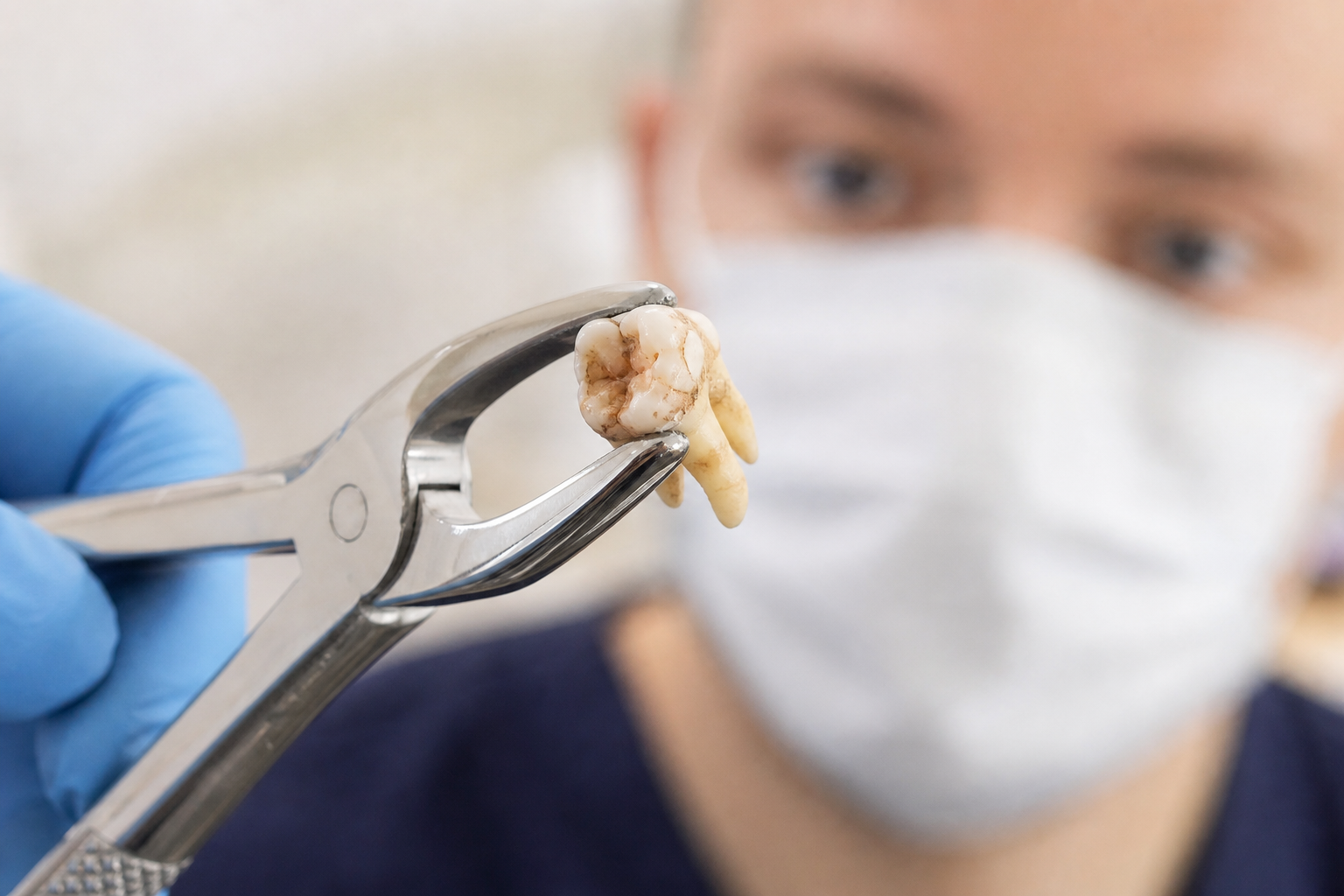
- Repeated infections of the same tooth despite treatment. Chronic or recurrent infection can weaken the tooth and surrounding bone enough that extraction is recommended to protect overall oral health (WebMD).
- Large areas of tooth decay where too little tooth remains to support a crown or filling. When restorative options would be unreliable, removal is often the practical choice (MedlinePlus).
- Impact or crowding from wisdom teeth that damage adjacent molars. Impacted wisdom teeth that cause decay, gum disease, cysts, or damage to neighbouring teeth are commonly treated by surgical removal when they produce problems (Mayo Clinic).
- Advanced periodontal disease with progressive bone loss that cannot be controlled well enough to save the tooth long term. Extracting hopeless teeth may improve the success of treatment for remaining teeth (MedlinePlus).
Signs your tooth may be saved with treatment instead of extracted
Not every painful or infected tooth needs removal. These signs suggest your dentist may offer restorative care such as root canal therapy, a crown, or a repair:
- Pain is present but localised and improves after antibiotics or an initial procedure. If infection responds to treatment and supporting bone is intact, a root canal and restoration may be preferable (WebMD).
- Tooth structure is largely intact and the root and surrounding bone appear healthy on X-ray. Restorability on imaging is a key indicator that a tooth can be saved.
- No systemic symptoms and no spreading swelling, suggesting infection is contained and can be managed without extraction (Mayo Clinic).
- Patient preference to attempt preservation when clinically reasonable. Many dentists will prioritise tooth-saving treatment when the prognosis is fair to good.
Extraction versus root canal or restoration: clear decision criteria
Clinicians weigh several factors when deciding between extraction and salvage. Use these practical decision cues to guide your conversation with your dentist.
- Extent of decay or fracture. If decay reaches below the gumline or the root is fractured, extraction becomes more likely (MedlinePlus).
- Presence and spread of infection. Localised infections may respond to root canal therapy, but spreading infections or abscesses that do not resolve may require extraction for effective source control (WebMD).
- Periodontal support. Teeth that lack sufficient bone and periodontal support are often poor candidates for long-term restoration.
- Patient medical history and risk factors. Some medical conditions affect healing and infection risk and influence the recommended approach; your dentist will factor your overall health into the plan.
- Time, cost, and preference. Root canal plus crown can save a tooth but requires multiple visits and expense. Extraction with planned replacement may be a simpler or preferred option for some patients.
When a tooth is borderline, many dentists will offer a clear explanation of prognosis and alternatives so you can choose the path that matches your goals and health.
What to expect during extraction and immediate aftercare

Extractions are performed by a general dentist, an oral surgeon, or a periodontist depending on complexity. Simple extractions of visible teeth are usually done in the dental chair under local anaesthesia. Surgical extractions, such as impacted wisdom teeth, may require incisions and sutures and are often performed by a specialist (MedlinePlus).
- Anaesthesia and sedation options, including local anaesthesia for routine cases and conscious sedation for anxious patients. Your clinician will discuss appropriate options.
- Typical steps: numb the area, remove the tooth, control bleeding with gauze and sutures if needed, and give aftercare instructions.
- Immediate aftercare: rest, avoid rinsing vigorously for 24 hours, use ice for swelling, take prescribed pain medication or over-the-counter analgesics as directed, and follow any antibiotic plan if given (WebMD).
- Risks and signs to watch for: prolonged bleeding, severe pain not controlled by medication, persistent swelling or fever, or signs of dry socket. Contact your dentist promptly if you notice concerning symptoms.
Practical next steps for Scarborough residents
If you are in Scarborough and suspect you have one of the urgent signs listed above, contact SR Smile Care by phone or via the clinic website for emergency advice and booking. SR Smile Care lists tooth extractions and emergency dental care among its services and can advise whether same-day assessment is needed; view details on the clinic extraction page teeth extractions and clinic information at SR Smile Care. The clinic is located at 2190 Warden Ave. Ste 205, Scarborough, ON M1T 1V6. Bring a list of medications and a photo ID to your appointment when possible.
If you have systemic symptoms such as fever, spreading swelling, or difficulty breathing or swallowing, go to the nearest emergency department after calling your dental clinic to let them know. For less urgent but concerning symptoms, book an appointment as soon as possible and bring any X-rays or recent dental records if available.
Common patient concerns and realistic clinician responses
- Will extraction be painful? Modern anaesthesia and sedation make the procedure comfortable for most patients, and post-procedure pain is managed with medication and standard aftercare (MedlinePlus).
- Can a tooth always be saved? Not always. The decision depends on decay extent, bone support, infection severity, and overall health. Your dentist will explain options and prognosis.
- What about replacing a missing tooth? Replacement options include bridges, implants, and removable prostheses. Your dentist can discuss timing and planning once the mouth has healed.
- I am anxious about dental surgery. Ask your clinic about sedation options and stepwise care. Many practices offer measures to reduce anxiety during treatment.
Frequently asked questions
How do I know if my tooth infection needs extraction now or can wait for a scheduled appointment
If you have spreading swelling, fever, severe uncontrolled pain, or trouble breathing or swallowing, seek emergency care right away because these signs can indicate a spreading infection that needs prompt treatment (healthdirect, MedlinePlus). If symptoms are milder and localised, call your dentist for urgent but not emergency assessment.
If my wisdom tooth hurts what signs mean it must be removed
Repeated infection around a partially erupted wisdom tooth, damage to the adjacent molar, cysts, or significant pain and decay are common reasons for removal. Impacted wisdom teeth that cause these problems are often treated by extraction or surgical removal (Mayo Clinic).
Can SR Smile Care perform extractions and what sedation options are available
SR Smile Care lists teeth extractions and emergency dental care among its core services and has onsite clinicians to perform or coordinate extractions. Contact the clinic directly to discuss sedation and anaesthesia options for your case teeth extractions.
How long is recovery after a routine extraction and when should I call back
Most patients have the most discomfort for the first 48 to 72 hours and begin to improve after that with proper care. Call your dentist if bleeding is heavy, pain worsens after initial improvement, you develop fever, or swelling increases rather than decreases (WebMD).
If I lose a tooth what are the replacement options and when should I plan for them
Replacement options include dental implants, fixed bridges, or removable dentures. Your dentist will advise on timing; many clinicians wait until healing is complete before placing a permanent replacement to ensure the best outcome.
If you recognise any urgent signs or need an assessment, contact SR Smile Care online or by phone to arrange same-day advice or booking. SR Smile Care