
If you have a missing or failing tooth, the choice between dental bridges vs implants comes down to specific clinical criteria rather than a single right answer. This article compares both options using the factors patients care about most: what each replaces, the effect on adjacent teeth, bone preservation, treatment length, maintenance, and who is typically a candidate. You will also get practical next steps to arrange a local consult at SR Smile Care in Scarborough.
Quick answer at a glance
Short summary: choose a bridge when you need a faster, non surgical replacement and the neighbouring teeth are already suitable for crowns. Consider an implant when preserving jawbone and avoiding alteration of healthy adjacent teeth is a priority, and when you have sufficient bone and general oral health.
- Bridge fits situations needing a shorter treatment timeline or when implants are not suitable.
- Implant fits single tooth replacement where long term bone preservation matters because the implant replaces a tooth root and transmits biting forces into the jawbone (implant guide).
- If you are unsure, a clinical exam and radiographic imaging will identify bone volume and the health of neighbouring teeth, which determine candidacy.
How each option works: what is a bridge and what is an implant
How a dental bridge is made and fitted
A dental bridge replaces one or more missing teeth by anchoring an artificial tooth, or pontic, to crowns placed on the teeth adjacent to the gap. Those adjacent teeth must be prepared to receive crowns, which means removing some enamel and reshaping them to support the bridge. Bridges are completed in fewer appointments than implants and can restore chewing function and appearance quickly. They are commonly used when the neighbouring teeth already have restorations or when a faster, non surgical solution is preferred. For details on the bridge approach and when clinicians recommend it, see this comparison of bridge and implant options (bridge vs implant comparison).
How a dental implant is placed and restored
A dental implant is a titanium post inserted into the jawbone to act as a root replacement. After the implant integrates with bone, a custom crown is attached to restore the visible tooth. Because the implant replaces a root, it helps transmit chewing forces into the bone and supports bone health at the site over time. That root replacement function is a primary reason clinicians recommend implants when preserving bone is important (implant guide).
Typical recovery and follow up for each
Bridges usually require minimal surgical recovery because the work is mostly performed on existing teeth and involves limited soft tissue healing. Implants require a surgical phase and a healing period while the implant bonds with bone, followed by restoration. Both options need routine care, including professional cleaning and daily oral hygiene. Your dentist will outline follow up visits and any temporary restorations or dietary precautions during healing.
Decision criteria patients use and why they matter
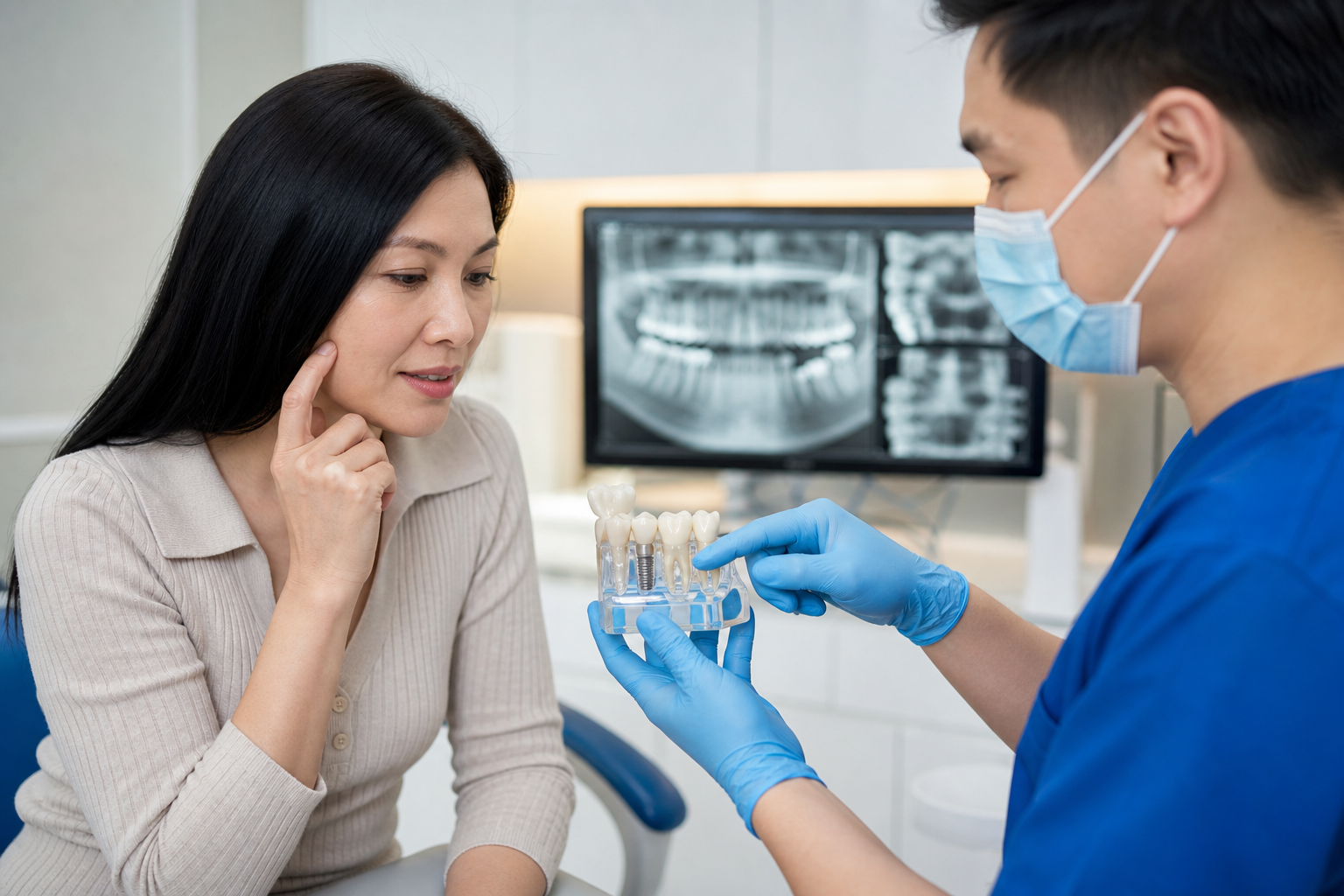
The following criteria are the clearest way to compare dental bridges vs implants. Each criterion explains what to expect and why it matters for your smile.
What each option replaces and how it affects chewing
Bridges replace the visible portion of missing teeth and rely on neighbouring teeth for support. They restore chewing ability effectively, especially for short spans. Implants replace both the root and the crown, so they restore biting forces in a way that more closely resembles a natural tooth and can improve long term chewing stability.
Effect on adjacent teeth
Bridges require shaping healthy adjacent teeth to accept crowns, which removes tooth structure and can increase long term restorative needs. Implants do not require modification of neighbouring teeth, so they avoid altering healthy tooth structure. This difference is a key trade off when the adjacent teeth are healthy and unrestored (bridge vs implant comparison).
Bone preservation at the missing tooth site
Because implants replace a tooth root and transfer forces to the jawbone, they help maintain bone volume at the site of the missing tooth. Bridges do not prevent the gradual bone loss that can occur after a tooth is lost. Over years, preserved bone can support neighbouring teeth and influence future treatment options, which is why implants are often recommended when long term bone health is a priority (implant guide).
Durability and maintenance
Both bridges and implants can provide long lasting results with proper care. Bridges may need replacement or repairs after a number of years if underlying teeth develop decay or if the fit changes. Implants can last for many years when well maintained, although the crown portion may require replacement eventually. Daily oral hygiene, periodic professional maintenance, and prompt attention to problems will extend the life of either restoration.
Procedure length and recovery
Bridges typically require fewer visits and a shorter overall timeline because they avoid surgical implant placement and osseointegration. Implants involve surgery and a healing period before the final crown is attached, which lengthens the total treatment time. If you need a quicker cosmetic fix, a bridge can often deliver faster results (bridge vs implant comparison).
Clinical candidacy and health constraints
Implant candidacy commonly depends on sufficient jawbone volume and good oral health. Patients with low bone may be offered bone grafting or alternative approaches, but grafting adds treatment steps and recovery time. Bridges can be selected when bone volume is inadequate for an implant or when surgery is not an option. Clinical imaging and a comprehensive oral exam determine which path is appropriate (implant guide).
Costs and practical considerations
Cost drivers differ. Bridges can be less complex in the short term because they avoid surgery and grafting. Implants can be more complex up front, especially if bone grafting is required. Since pricing varies widely by clinician and by the individual treatment plan, discuss expected components, payment options, and a written estimate before proceeding. Consider long term maintenance when comparing total value.
Who is commonly a candidate for a bridge and who for an implant
Match common scenarios to the option that often fits. These are clinical tendencies, not prescriptions. A personalised exam is the final determinant.
- Bridge more likely: You need a quicker restoration, you have neighbouring teeth that already need crowns, or jawbone volume is insufficient for implant placement and grafting is not desired.
- Implant more likely: You want to avoid altering healthy neighbouring teeth, preserving jawbone is important, and you have enough bone or are open to grafting after a clinical assessment.
- Multiple missing teeth: Short spans are commonly treated with bridges or implant supported bridges. The right choice depends on span length, bone, and the condition of adjacent teeth.
Simple candidacy checklist
- Do you have healthy adjacent teeth that you prefer not to alter? If yes, an implant is often preferable.
- Is your jawbone volume adequate on radiographic imaging? If no, a bridge or grafting plus implant are options to discuss.
- Do you need a faster treatment without surgery? If yes, a bridge may suit you.
Common objections and clinical trade offs to expect

Patients ask sensible questions about invasiveness, risk to healthy teeth, and time to function. Below are clear responses to common concerns.
- I do not want surgery. Bridges avoid surgical implant placement. That may be a deciding factor for patients who cannot have surgery or who prefer not to undergo a surgical phase.
- Will healthy teeth be ruined? Bridges require preparing adjacent teeth, which removes enamel and makes those teeth dependent on restoration. If neighbouring teeth are healthy and unrestored, implants avoid that alteration (bridge vs implant comparison).
- What if I lack bone? Low bone volume can make implants more complex. Bone grafting may restore eligibility, but it lengthens treatment. Bridges become a practical alternative when grafting is not feasible or not wanted. Imaging and a specialist opinion will clarify options (implant guide).
Local next steps for Scarborough patients and booking with SR Smile Care
SR Smile Care lists dental crowns and bridges among its services and operates a hygiene led clinic with an onsite dentist for fillings and restorations. The clinic welcomes new patients and references CDCP acceptance, so it is a practical place to start for a local assessment (dental crown and bridges, SR Smile Care homepage).
What to bring to your consult
- A list of medical conditions and medications.
- Any recent dental x rays or reports if available.
- Questions about imaging, grafting, provisional restorations, and the expected timeline.
Questions to ask at the appointment
- Do I have enough bone for an implant or will bone grafting be required?
- What are the advantages and disadvantages of a bridge in my mouth?
- How soon could I have a finished restoration and what follow up is needed?
To arrange a consultation or exam at SR Smile Care, visit the clinic website for booking or call the clinic directly. The team can perform imaging, review candidacy, and produce a personalised treatment plan based on your oral health.
Final checklist and how to arrange a consult
Printable checklist before you book
- Confirm whether you prefer to avoid surgery.
- Ask whether adjacent teeth already need crowns.
- Obtain radiographic imaging to check bone volume.
- Request a written treatment plan with phases, timelines, and follow up.
When you are ready for a personalised recommendation, book a clinical exam and imaging at SR Smile Care. A face to face visit is the only way to confirm candidacy and design a treatment plan that fits your health and goals (SR Smile Care).
Frequently asked questions
Am I a candidate for a dental implant or a dental bridge
Candidacy depends on an oral exam and imaging. Implants generally require adequate jawbone and good oral health. Bridges are often chosen when bone is insufficient or when a quicker, non surgical option is preferred. A clinician will review your images and medical history to advise the best option (implant guide).
How long does treatment typically take for a bridge compared with an implant
Bridges are usually completed faster because they avoid surgical implant placement and a bone integration phase. Implant treatment includes surgery and a healing period before the final crown is attached, which extends the overall timeline. Exact timing varies by case and by whether grafting is needed (bridge vs implant comparison).
Will a dental bridge damage my healthy adjacent teeth
Preparing adjacent teeth for crowns removes enamel and commits those teeth to restoration. That is why bridges are usually recommended when the neighbouring teeth already need crowns or restorations. If adjacent teeth are healthy and unrestored, an implant avoids modifying them (bridge vs implant comparison).
Can bone grafting make me eligible for a dental implant if I have low bone volume
Yes, bone grafting can increase bone volume and make implant placement possible in many cases. Grafting adds steps and healing time, so discuss the benefits and timeline with your dentist or specialist before deciding (implant guide).
How should I choose between a bridge and an implant when I have multiple missing teeth
The choice depends on span length, the condition of adjacent teeth, bone quality, and your preference regarding surgery. Short spans can be restored with bridges or implant supported restorations. A clinical exam and imaging will help determine which option best meets your long term goals.
SR Smile Care offers a personalised exam and imaging to confirm candidacy and design a treatment plan. Book a consult online or call the clinic to discuss dental crown and bridge options and to begin a tailored treatment plan that fits your needs.