
7-step new patient dental exam checklist for Scarborough patients
Quick summary: TL;DR new patient dental exam checklist
If you want the essentials fast, bring photo ID, your insurance or CDCP information, a current medication list, and any recent dental records. Expect a cleaning by the hygienist, an exam by the dentist, and X-rays only if indicated. SR Smile Care is at 2190 Warden Ave Ste 205, Scarborough, ON M1T 1V6. Call the clinic at +1 647-368-7785 to book or use the clinic website for directions and appointment requests.
Quick checklist
- Photo ID and health card or government ID
- Insurance, CDCP or benefit card and policy details
- Current medication list and medical history
- Any recent dental X-rays or referral letters (if available)
- Comfort item for children or items to reduce anxiety
When to call instead of walking in
Call ahead if you have severe pain, fever, swelling, or active bleeding. If it is a dental emergency, tell the front desk so staff can prioritise and advise whether to come to the clinic or seek urgent hospital care.
1) Before you arrive: paperwork, eligibility and decision points
Complete any online new-patient forms the clinic provides and gather photo identification. When you book, confirm appointment availability and ask whether the clinic needs any documents emailed in advance. If you expect public benefit coverage, check Canadian Dental Care Plan rules before your visit because the program lists eligibility and frequency limits for covered exams and treatments; see the official guide for details at Canada.ca.
What to complete at home
- New-patient registration and consent forms if available online
- Medical history summary with allergies, recent surgeries, pregnancy status and major health issues
- List of medications, doses, over-the-counter supplements and any anticoagulant therapy
Decision: bring past dental records or not
If you have recent X-rays (within the past year) bring them or ask your previous office to send them. That can reduce duplicate imaging, but dentists will order current X-rays when clinically needed. If you have a complex dental history, a referral letter or chart summary helps the dentist prioritise the assessment.
2) What to bring: ID, meds, records and comfort items
Arrive with the documents and small items that let the team register you quickly and keep you comfortable during the visit.
Essential items
- Photo ID (driver’s licence or government ID) and any provincial health card you use for identification
- Insurance card, CDCP confirmation or other benefit plan details and the group/policy number if available
- Written medication list and any relevant medical letters from your physician
Helpful items
- Recent dental X-rays or referral notes from your prior dentist
- For children: a small toy, favourite book, or comfort object; for anxious adults: headphones, distraction music, or breathing tools
- Payment method in case a co-pay or self-pay visit is required
3) Arrival and registration: what the front desk will do

Plan to arrive 10 to 15 minutes early so the front desk can confirm identity, copy insurance or CDCP documents, and finish any outstanding forms. The staff will review your medical history to confirm allergies and current medications, and they will record accessibility or communication needs. If you require an interpreter or special assistance, notify staff when you book.
Payment and consent
The clinic will explain payment options and provide an estimate for any recommended work before procedures begin. If you plan to use the Canadian Dental Care Plan, remind staff so they can verify coverage and explain any limits that may affect treatment scheduling; the Canada.ca guide outlines frequency rules and covered services.
When the clinic may ask you to reschedule
If you arrive with a fever, uncontrolled bleeding, or signs of serious infection, staff may triage your care and request a scheduled time or redirect you to urgent services to protect other patients and clinic staff.
4) The hygiene check: cleaning, periodontal screening and homecare advice
The dental hygienist performs the cleaning portion of the visit: removing plaque and hardened tartar, polishing teeth and assessing gum health with periodontal probing. This hygiene step is central to prevention and is one of the three common parts of a dental checkup: professional cleaning, diagnostics when needed, and the dentist’s clinical exam.
What to expect during scaling and polishing
- Sensations: scraping or vibration during tartar removal, mild pressure during polishing, and possible temporary sensitivity
- Duration: typically 20 to 45 minutes for routine cleanings, longer if heavy deposits or gum disease require deeper scaling
Periodontal screening and homecare tips
Hygienists measure pocket depths and note bleeding or inflamed areas. Expect specific homecare advice, such as recommended brushes, flossing technique, interdental cleaners, and toothpaste options for sensitivity or high-caries risk. If deeper cleaning is indicated, the team will explain why and propose a followup schedule.
5) The dentist exam and diagnostics: X-rays, oral cancer screening and treatment planning
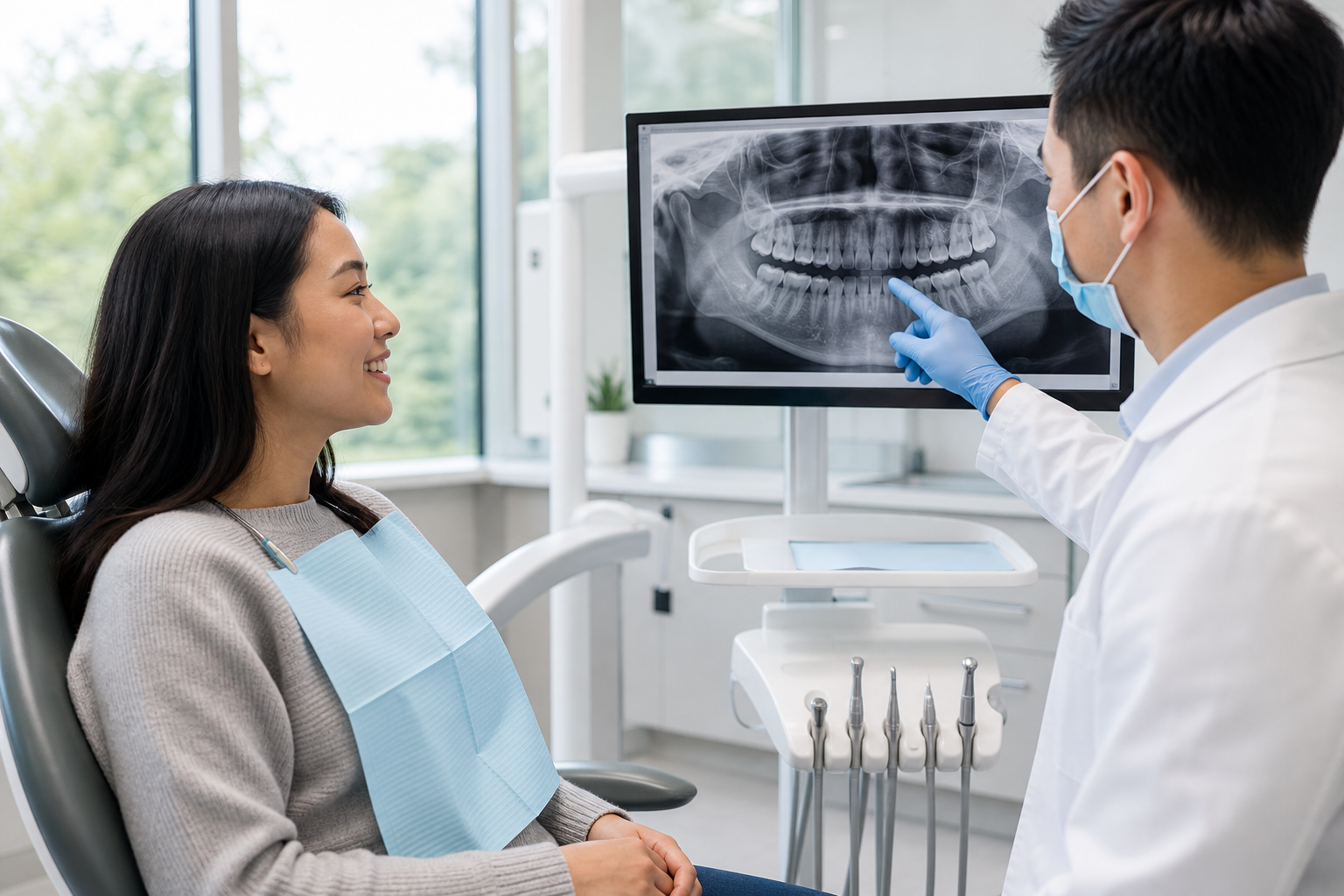
After hygiene, the dentist performs a clinical exam of teeth, gums and soft tissues, including an oral cancer screen of the lips, tongue, floor of mouth and throat. Diagnostic X-rays are recommended when they are needed to detect problems not visible clinically; they are not automatic for every new patient. The MedlinePlus overview explains that a full dental visit normally comprises cleaning, diagnostics such as X-rays when appropriate, and the dentist’s exam.
How X-ray decisions are made
- New patients with symptoms, visible decay, or missing records often need X-rays at the first visit
- If you have recent, good-quality imaging the dentist may accept those instead of repeating films
Reading and using a treatment estimate
If treatment is recommended, you will receive a written estimate that lists procedures, suggested timing and an explanation to help you prioritise urgent versus elective care. Staff can help schedule staged treatment, verify insurance or CDCP coverage, and discuss payment options before work begins.
6) Safety, infection prevention and comfort measures
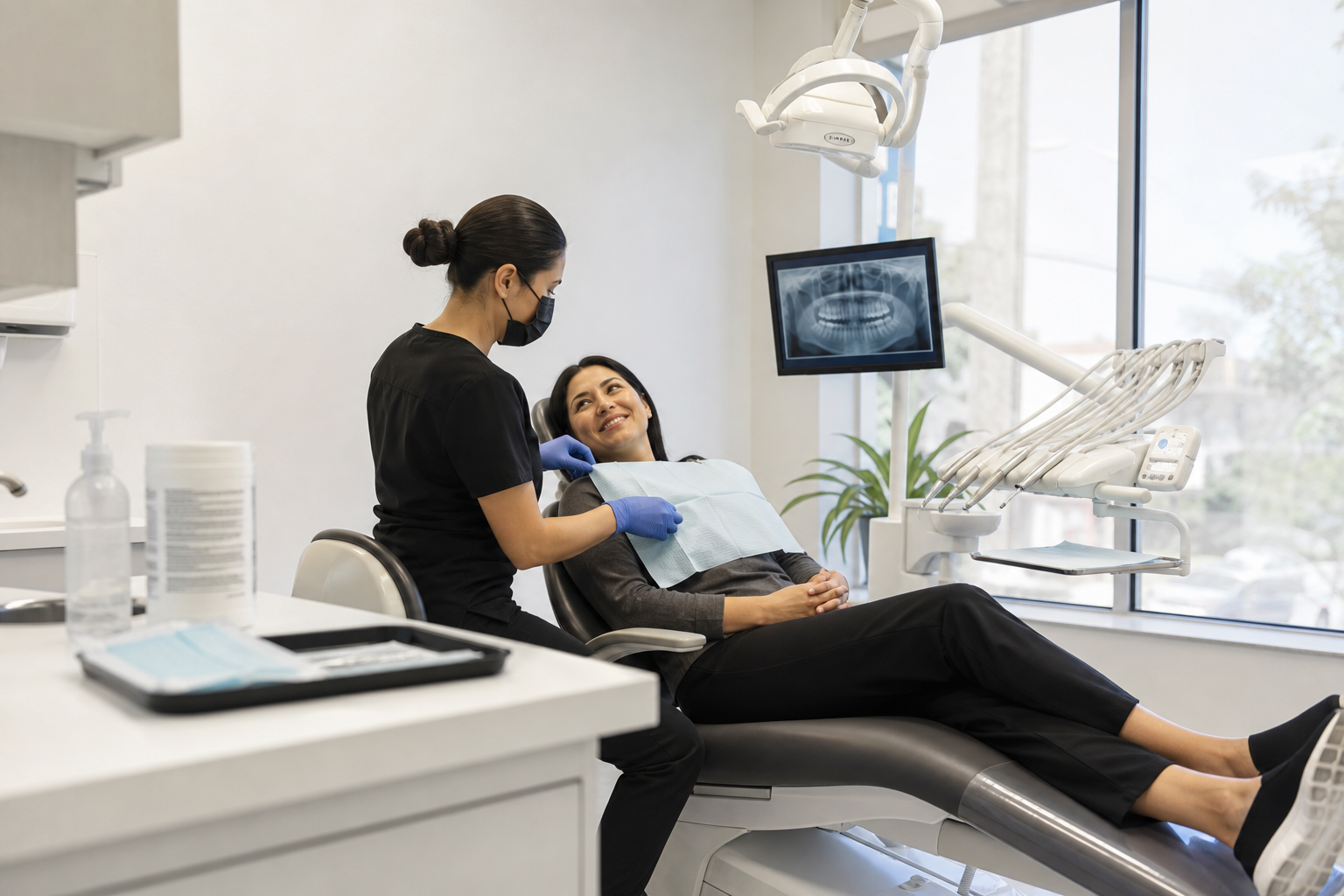
Dental clinics in Ontario follow infection prevention and control practices that cover instrument reprocessing, surface disinfection and staff procedures. For specifics, the provincial IPAC checklist outlines core elements clinics are expected to follow; ask the clinic which measures they implement if you have concerns.
Comfort options for anxious patients and children
- Pre-visit calls to explain the appointment and reduce fear
- Short breaks during appointments, topical gels for sensitivity, and child-friendly scheduling
- For severe anxiety, the dentist can discuss sedation or advanced behaviour management after clinical assessment
7) After the visit: followups, estimates, emergency care and booking next steps
Before you leave, confirm any recommended followup appointments, receive a written estimate for proposed treatment, and ask staff to verify coverage with your insurer or the CDCP. The Canada.ca guide lists benefit rules and frequency limitations, so confirm eligibility before relying on plan coverage for treatment costs.
Prioritising care and common followups
- Urgent pain or infection is prioritised for same-day or expedited care
- Recall and hygiene visits are typically scheduled every three to twelve months depending on risk
- Book treatment-planning consultations for cosmetic or restorative work so you can review options and costs
If you need emergency attention after hours, call +1 647-368-7785 and follow any urgent instructions provided by staff. SR Smile Care welcomes new patients and posts local booking and contact information on the clinic website; use the clinic page for directions or to request an appointment: SR Smile Care, and see the clinic’s local dental exam overview at Dental Exam: Catch Problems Early and Save Big in.
Frequently asked questions
What should I bring to my first dental exam?
Bring photo ID, your insurance or CDCP documentation, a current medication list, and any recent dental X-rays or referral letters. For children, include a comfort item. These items help staff register you quickly and let clinicians make informed decisions.
Will I need X-rays at my first visit to SR Smile Care?
X-rays are ordered when clinically indicated rather than automatically. If you have signs of decay, missing records, or recent pain, the dentist is likely to recommend radiographs. If you have recent, readable images your dentist may accept them instead of repeating films; see the MedlinePlus overview for context.
Does SR Smile Care accept CDCP or public dental benefits?
SR Smile Care indicates acceptance of programs such as the Canadian Dental Care Plan, but CDCP eligibility and frequency limits apply. Confirm coverage and the clinic’s submission procedures when you book and review the federal CDCP guide for program rules.
How long does a new patient dental exam usually take?
Most new patient visits last between 45 and 90 minutes depending on whether X-rays, a full hygiene appointment, or additional diagnostics are needed. If deeper cleaning or emergency care is required, plan for a longer visit.
What can I do if my child or I am anxious about the appointment?
Tell the front desk when you book so the team can schedule a calm time, explain the process beforehand, allow short breaks, and use child‑friendly approaches. For severe anxiety, discuss sedation or other management options with the dentist during your visit.
Book your new patient exam at SR Smile Care, 2190 Warden Ave Ste 205, Scarborough, ON M1T 1V6. Call +1 647-368-7785 or visit the clinic website at the official website to arrange a time that suits your family.