
What this article helps you check
If you are considering teeth whitening or have just finished a session, this article lists preventable mistakes that increase the chance of tooth sensitivity after whitening, explains why sensitivity happens, and gives evidence-backed relief and prevention steps. You will also find clear warning signs for when to contact a Scarborough dentist and a short local checklist to prepare before you whiten.
Why whitening can cause tooth sensitivity
Whitening products use peroxide agents that diffuse through enamel and dentine to break down staining molecules. That diffusion can transiently irritate the dental pulp or allow fluid movement in dentinal tubules, which patients perceive as sensitivity. Clinical research shows sensitivity commonly follows both at-home and in-office bleaching, and timing often peaks shortly after treatment. Comparative studies report higher patient-reported sensitivity when stronger peroxide concentrations are used PMC study, PubMed record.
Pre-treatment mistakes that raise your risk
Before starting any whitening, run a quick checklist. These specific mistakes increase the chance of uncomfortable sensitivity later. For each item below you will find why it matters, what to do immediately, and when to postpone whitening.
Untreated cavities, cracked teeth, or failing restorations
Why it matters: Open decay or cracks let peroxide reach the pulp more easily and can amplify pain. Immediate action: Get a dental exam and have cavities or cracks treated before whitening. When to postpone: Delay whitening until repairs are completed and you feel comfortable with the treated tooth.
Gum recession and exposed root surfaces
Why it matters: Receded gums expose dentine and root cementum, which are more sensitive than enamel. Immediate action: Ask your dental team to evaluate soft tissue and discuss alternatives, such as whitening limited to nonexposed enamel or professional desensitizing treatments first. When to postpone: If you have significant root exposure, avoid whitening until a clinician assesses the risk.
Recent dental work
Why it matters: Teeth that recently received fillings, crowns, or root canal treatment can respond unpredictably to peroxide. Immediate action: Tell the clinician supervising or recommending whitening about any recent restorations. When to postpone: If restorative work is recent, wait until the tooth is stable and the dentist confirms it is suitable for whitening.
Existing frequent sensitivity
Why it matters: If your teeth are already sensitive to hot, cold, or sweets, whitening may worsen symptoms. Immediate action: Begin a short course of desensitizing toothpaste and consult a clinician about professional fluoride varnish before whitening. When to postpone: Consider delaying whitening until sensitivity is controlled and a dentist confirms it is safe to proceed.
Choosing a very high peroxide concentration without a dentist’s oversight
Why it matters: Higher concentrations often speed whitening but increase short-term sensitivity; comparative trials report greater sensitivity with stronger agents PMC study. Immediate action: Prefer dentist-supervised options or lower concentration at-home protocols if you have risk factors. When to postpone: If you cannot access professional guidance for a higher concentration product, avoid self-administering it.
Mistakes during and after whitening that make sensitivity worse
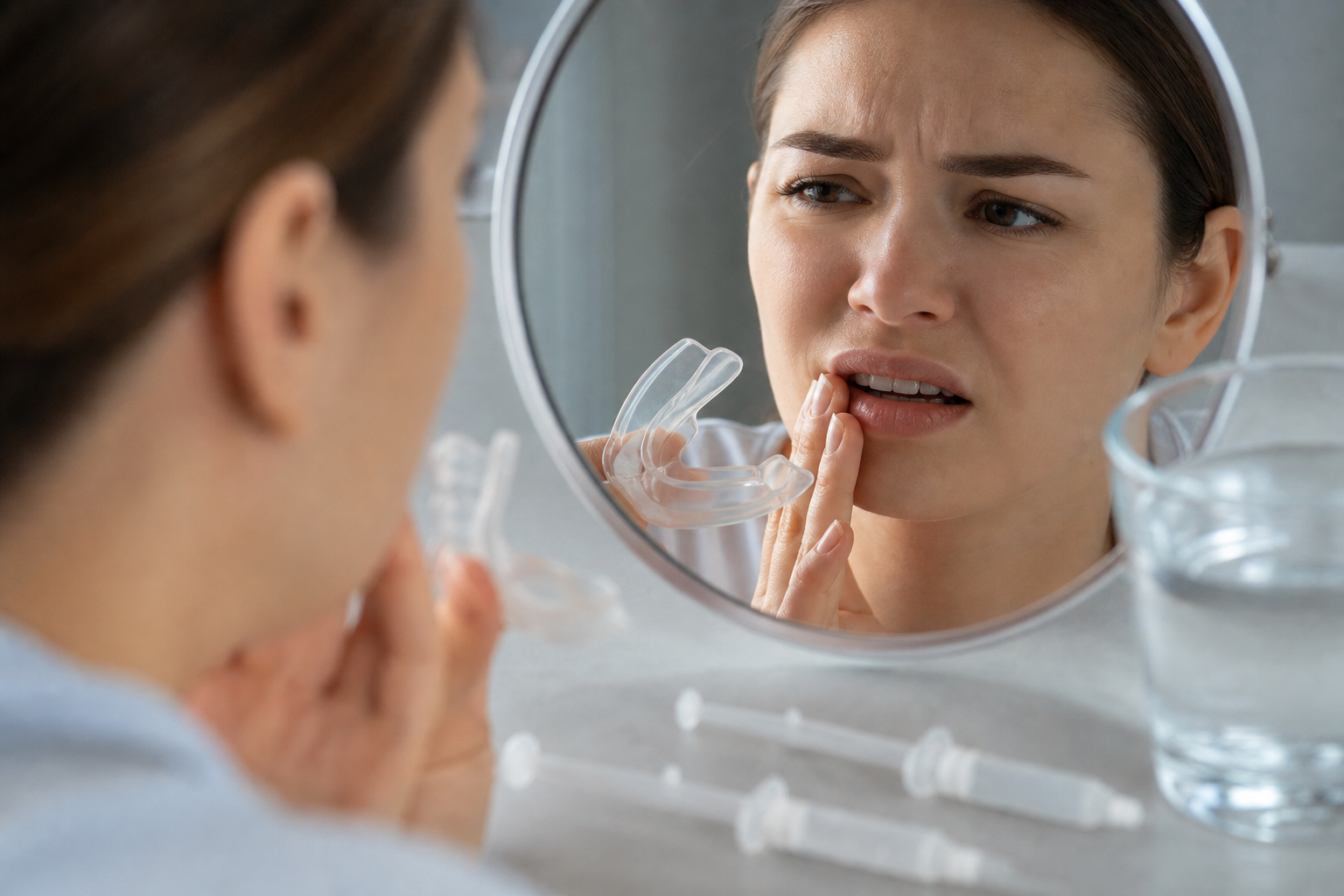
After you begin whitening, several routine behaviours can amplify discomfort or slow recovery. These are controllable steps that reduce symptoms when followed correctly. For detailed aftercare, see the clinic’s aftercare guidance Teeth whitening aftercare tips to keep your smile bright longer.
Using whitening products too often or for too long
Why it matters: Exceeding recommended frequency or duration prolongs pulp exposure to peroxide. Do this instead: Follow product instructions or your dentist’s prescription exactly and pause if sensitivity appears.
Eating acidic, very hot, or very cold foods right after treatment
Why it matters: Acidic or extreme temperature foods can irritate dentine and increase discomfort during the early recovery window. Do this instead: Choose neutral, room-temperature foods for the first 24 to 48 hours or longer if you are sensitive.
Aggressive brushing right after whitening
Why it matters: Abrasive toothpaste or hard brushing can expose more dentine and worsen sensitivity. Do this instead: Use a soft toothbrush and gentle technique; consider desensitizing toothpaste recommended below.
Skipping desensitizing toothpaste or professional fluoride follow up
Why it matters: Protocols that include potassium nitrate toothpaste or topical fluoride reduce post-whitening sensitivity for many patients. Do this instead: Start desensitizing toothpaste a week before treatment and continue for several weeks after as needed, and ask your clinician about fluoride varnish if you have risk factors. Clinical summaries support using desensitizing toothpaste around whitening procedures Dental Protocol guidance.
Evidence-backed relief options you can try first
When sensitivity appears, begin with conservative, evidence-supported steps. If symptoms are manageable you often do not need urgent care.
- Desensitizing toothpaste: Toothpaste containing potassium nitrate or similar agents can reduce sensitivity if used regularly; clinical summaries recommend starting before whitening and continuing afterward Dental Protocol guidance.
- Fluoride varnish or gels: Professionally applied fluoride helps remineralize and soothe exposed dentine and is a standard in-office option if sensitivity persists.
- Pause the whitening: Temporarily stopping further whitening sessions often removes the immediate trigger and allows symptoms to settle.
- Cold avoidance and gentle hygiene: Avoid extreme temperatures, brush gently with a soft brush, and skip abrasive whitening toothpaste during recovery.
- In-office topical agents: Dentists can apply stronger desensitizing agents or varnishes that provide faster relief when over-the-counter measures are insufficient.
If home measures do not improve symptoms within a few days or if pain is severe, contact a dentist for an assessment. Clinical studies report that sensitivity usually peaks soon after treatment but can vary by product and concentration PMC study, PubMed record.
Warning signs that need a dentist now
Most post-whitening sensitivity is temporary, but certain signs require prompt dental care. Contact SR Smile Care immediately if you experience any of the following:
- Severe ongoing pain that prevents sleep or eating.
- Swelling, fever, or any sign of infection such as pus.
- Sensitivity that worsens more than a few days after stopping treatment or that appears suddenly and intensely after using an over-the-counter product.
- A tooth that darkens in colour, becomes loose, or feels different to bite on.
SR Smile Care offers emergency dental care and welcomes new patients for assessment and urgent treatment. You can find clinic details and booking options on the SR Smile Care website SR Smile Care. If you prefer, call the clinic directly at +1 647-368-7785 to explain symptoms and request a same-day assessment.
How to choose in-office or at-home whitening safely
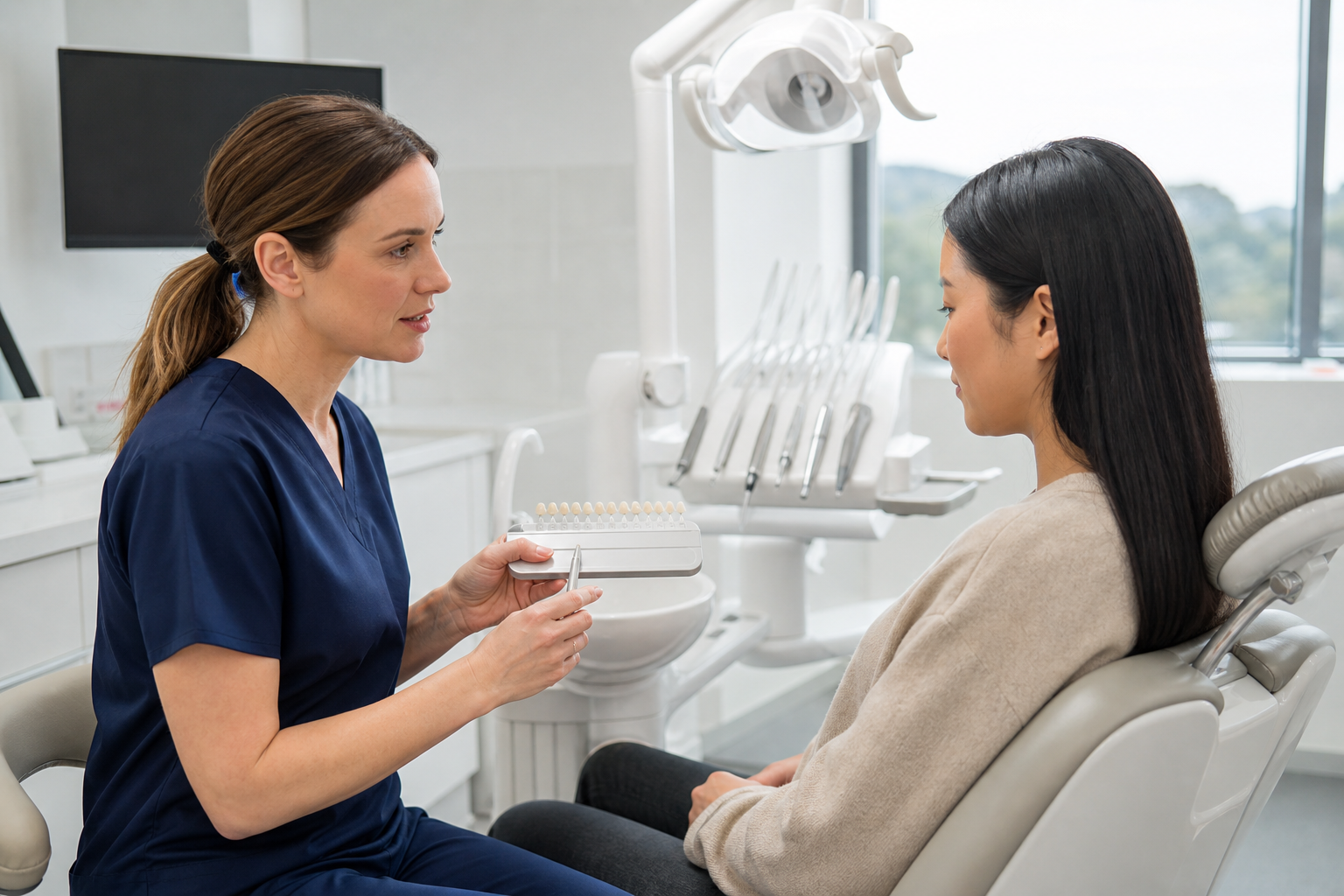
Deciding between an in-office procedure and a dentist-supervised at-home kit comes down to tradeoffs and your sensitivity risk. Comparative research indicates that in-office whitening often uses higher peroxide concentrations and can produce greater short-term sensitivity, while lower concentration at-home options tend to be milder but require more time for results PMC study.
Decision checklist:
- If you have untreated dental problems or frequent sensitivity, choose a dental assessment first and favour lower concentration or supervised at-home kits.
- If you need fast, stronger whitening and accept a higher short-term sensitivity risk, consider in-office whitening with professional safeguards and immediate desensitizing options.
- If you prefer the lowest short-term risk, ask your dentist about staged whitening or using desensitizing agents before moving to stronger concentrations.
Local next steps: quick checks and how SR Smile Care can help
One-minute pre-whitening checklist you can run now:
- Do you have pain, cavities, recent restorations, or visible cracks? If yes, book an exam first.
- Do your gums show recession or roots appear exposed? If yes, get a clinician opinion about risk.
- Have you had frequent sensitivity in the last month? If yes, begin desensitizing toothpaste and consult a dentist about fluoride varnish.
SR Smile Care is a local Scarborough dental clinic offering professional whitening and emergency dental care. The clinic is located at 2190 Warden Ave., Suite 205, Scarborough, ON M1T 1V6 and can be reached at +1 647-368-7785 for appointments and urgent assessments. Details and aftercare guidance are available on the website SR Smile Care and in the aftercare article Teeth whitening aftercare tips to keep your smile bright longer. Typical clinic hours are Monday, Wednesday and Friday 10:00 to 18:00, and Saturday 09:00 to 17:00.
FAQ
How long does tooth sensitivity after whitening usually last
Recovery time varies by product and patient risk factors. Many people experience peak sensitivity shortly after treatment and improvement over days. Comparative studies show variability depending on peroxide concentration and protocol PMC study. If sensitivity persists beyond a few days despite conservative measures, contact a dentist.
When should I stop whitening and see a dentist for sensitivity
Pause whitening immediately if pain is severe, prolonged, or accompanied by swelling, pus, or fever. Also see a dentist if sensitivity prevents normal eating or sleep, or if it does not improve after conservative home care and a short pause.
Which over-the-counter products help with post-whitening sensitivity
Desensitizing toothpastes that list potassium nitrate or similar active ingredients are supported by clinical guidance to reduce whitening-related sensitivity; starting them before whitening often helps Dental Protocol guidance. If OTC measures fail, professional fluoride varnish or in-office desensitizing agents are options.
Are in-office whitening treatments more likely to cause sensitivity than at-home kits
Higher concentration in-office treatments can produce stronger short-term sensitivity for some patients, while lower concentration at-home options often cause milder symptoms but take longer for the same effect. Discuss your sensitivity history with a dentist to choose the safest option for you PMC study.
Can whitening permanently damage my enamel or dental work
Whitening does not typically damage sound enamel when used as directed, but it will not change the colour of many restorations such as crowns or fillings. If you have compromised enamel, extensive restorations, or existing dental problems, consult a dentist before whitening to assess safety and expected results.
Concise next step
If you are worried about tooth sensitivity after whitening or want a pre-treatment check, book an assessment or emergency visit with SR Smile Care in Scarborough to get safe, personalized advice and clinical relief options. For urgent concerns call +1 647-368-7785 to request a same-day assessment.