
Choosing family dentistry for seniors requires specific checks beyond the usual location and hours. Older adults face higher risks of tooth decay, gum disease, dry mouth and oral cancer, and caregivers need a practical way to compare clinics on services, accessibility, emergency care and public program support. The ordered decision path below gives you seven checks with clear stop points so you can decide whether to call, keep searching, or book an appointment today.
Why a seniors-specific checklist matters in Scarborough
Seniors often keep natural teeth longer than previous generations, but age and medications increase the chance of dry mouth, decay and periodontal problems, and they may have a higher risk of suspicious mouth changes. The Ontario Dental Association advises seniors and caregivers to watch for mouth changes and to see a dentist if problems last 14 days. Use this checklist to confirm clinical fit and practical access for Scarborough patients, then follow the printable phone script and appointment handout to make first contact smooth.
See the Ontario Dental Association guidance for seniors and caregivers for prevention tips and warning signs: Ontario Dental Association guidance.
The 7-step decision checklist you can use right now
- Step 1: Confirm the clinical services seniors commonly need
- Step 2: Check for an onsite dentist and restorative capacity
- Step 3: Verify program acceptance and practical help with public coverage
- Step 4: Check accessibility and practical on-site features
- Step 5: Ask about comfort, anxiety supports and one-on-one care
- Step 6: Confirm emergency dental care and same-day options
- Step 7: Prepare practical information to bring to the first visit
Each step below includes a quick stop point: when to call the clinic immediately, when to keep looking, and when to book.
Step 1: Confirm the clinical services seniors commonly need
Ask whether the practice routinely provides preventive care, dry mouth management, oral cancer screening, restorative treatments (fillings, crowns and bridges), extractions and emergency dental care. A single-clinic approach reduces travel and coordination for seniors who need multiple services. SR Smile Care lists these core services on its site and highlights routine oral cancer screening and emergency care as part of its offerings, making it a candidate to call when you want consolidated care.
Stop point: If the practice cannot provide at least preventive care, restorative work and oral cancer screening, keep searching. If they offer all three, call to discuss an initial geriatric-friendly exam and book.
Related reading: Dental cleaning: what to expect, how often, and simple prep tips, which explains the preventive baseline for senior patients.
Step 2: Check for an onsite dentist and restorative capacity
Seniors benefit when fillings and simple restorations can be completed in the same clinic and, ideally, during a single visit. Ask whether there is an onsite dentist who performs fillings, crowns and simple bridge work so you avoid referral travel and multiple appointments. SR Smile Care states an onsite dentist is available for fillings and restorations; confirm during your call which procedures are done in-house.
Stop point: If restorative care requires external referrals and you prefer a single location, continue your search. If the clinic handles common restorations onsite, move to Step 3 and schedule a pre-visit conversation.
Step 3: Verify program acceptance and practical help with public coverage

If cost or eligibility is a concern, ask whether the practice accepts the Ontario Seniors Dental Care Program, often called the CDCP, or other provincial programs, and whether staff will help with eligibility checks or application guidance. The provincial Seniors Dental Care Program has eligibility rules and an application process you can consult online; if you qualify, telling the clinic in advance often speeds the first visit.
Stop point: If the clinic accepts CDCP and can help with paperwork, book an appointment and request any forms you need to bring. If not, ask whether the practice can refer you to a dentist who does accept the program or whether a payment plan is available.
Step 4: Check accessibility and practical on-site features
Confirm the clinic address, parking or drop-off options, elevator access, seating for mobility devices, and whether the building entrance is at street level. Check clinic hours and whether they offer short-wait or dedicated appointment windows for seniors. SR Smile Care’s address at 2190 Warden Ave, Suite 205 places it near known local points of reference that can help plan a visit.
Stop point: If transport and physical access are barriers and the clinic cannot offer reasonable accommodations, look for an alternative closer to home or with guaranteed accessibility features. If access is adequate, proceed to Step 5.
Step 5: Ask about comfort, anxiety supports and one-on-one care
Many seniors are uncomfortable with dental visits. Prioritise practices that describe a gentle, patient-first approach and that offer pre-visit phone introductions, private or quieter scheduling, and staff experienced with older adults. Ask about mild sedation options if necessary, and whether the clinic will schedule extra appointment time for slower transitions or communication needs. SR Smile Care highlights a family-oriented environment and personalised attention; verify the specifics you need during the phone call.
Stop point: If the clinic cannot accommodate anxiety needs or extra time and your senior requires those supports, keep searching. If they can, book an extended first visit to allow a relaxed assessment.
Step 6: Confirm emergency dental care and same-day options
Seniors are at greater risk of sudden dental pain, infections or prosthetic problems. Ask whether the practice offers emergency dental care, an after-hours contact, or a clear triage pathway for urgent problems. If same-day care is critical, ask how emergencies are handled and whether the clinic holds slots for urgent visits.
Stop point: If the clinic has no emergency pathway and you need rapid access, choose a practice with explicit emergency procedures. If an urgent-care plan exists, note the contact steps and emergency criteria in your printed checklist.
Step 7: Prepare practical information to bring to the first visit
Bringing the right documents and information speeds treatment and protects safety. Prepare a concise folder with current medication list and dosages, medical history and physician contact, any program paperwork for CDCP, a description of mobility or communication needs, a consent and emergency contact name, and a note describing dry mouth or swallowing issues if present. Tell the clinic about any anticoagulant medications or dementia-related care needs before arrival so staff can plan.
Stop point: If a clinic asks for critical medical details but cannot accept them securely, request alternatives or choose another location. If they explain how they protect and use this information, schedule the appointment.
Warning signs and oral changes that need prompt attention
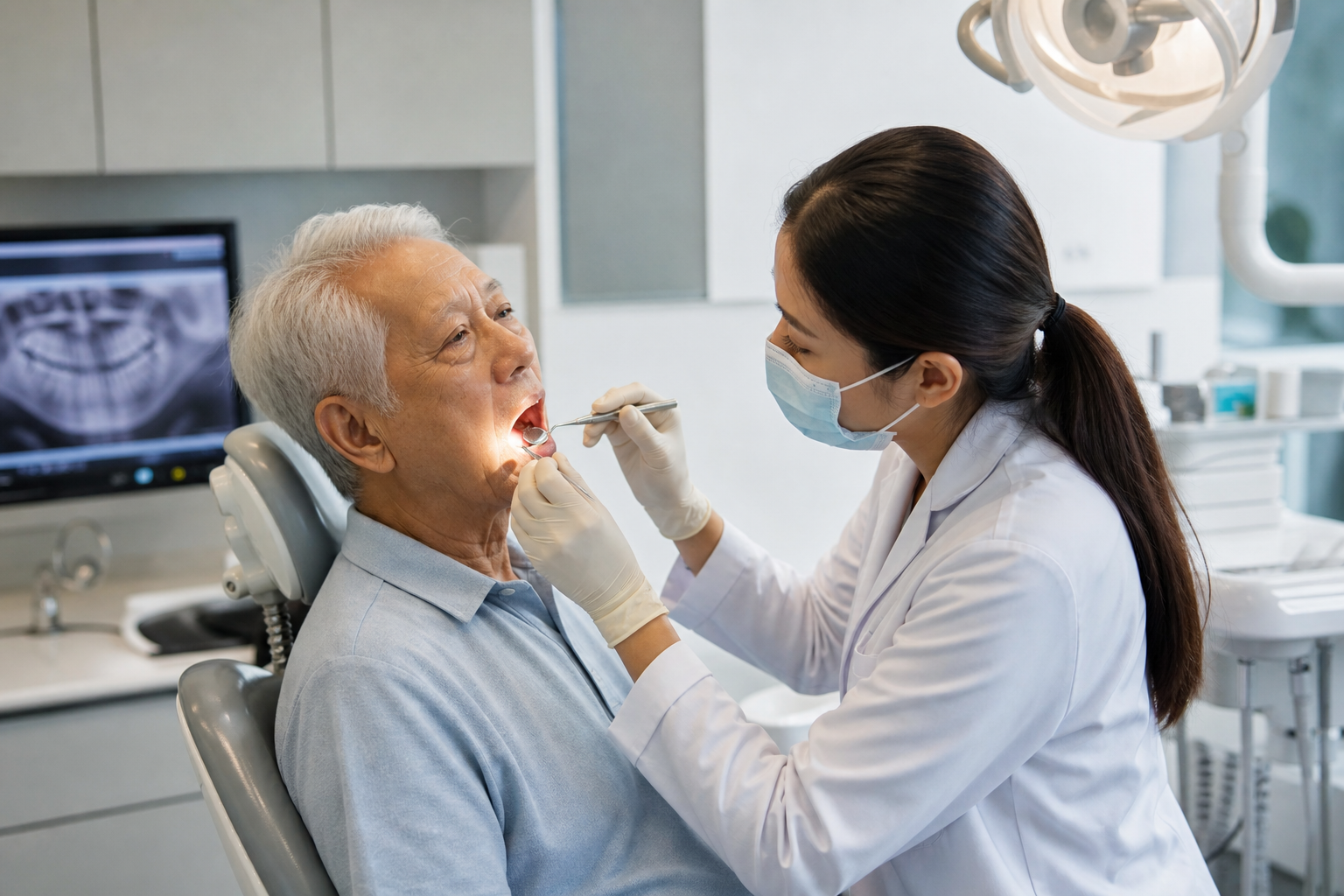
Watch for persistent or new symptoms and see a dentist promptly. Red-flag signs include mouth sores or lumps that do not heal within 14 days, sudden tooth or jaw pain, increasing swelling, loose teeth, unexplained bleeding, or a rapid change in dry mouth that affects eating and medication use. The Ontario Dental Association recommends professional review for mouth changes lasting 14 days or longer to rule out serious conditions.
If you see these signs, call for an urgent assessment or go to an emergency dental provider. If you need help deciding whether a symptom is urgent, describe it during a phone call to the clinic and ask whether you should come in that day.
Phone script and exact questions to ask before you book
Use this short script during your first call. Read it aloud for clarity or print it:
- Introduce yourself and relationship, for example: “Hello, I am calling for my mother, Jane Doe. She is 78 and lives nearby.”
- Ask the core questions: “Do you accept the Ontario Seniors Dental Care Program? Do you have an onsite dentist who performs fillings and crowns? Do you offer oral cancer screening during routine exams?”
- Accessibility and comfort: “Is the office accessible for a wheelchair? Can you schedule an extended first visit and do you offer pre-visit phone time so she can meet the hygienist?”
- Emergencies: “What is your emergency policy and do you have after-hours contact?”
- Documentation: “What should we bring to the first visit? Do you need medication lists or program paperwork?”
End by requesting the earliest available senior-friendly appointment and asking for directions or parking tips.
How to use Ontario seniors dental programs and practical next steps
To check program eligibility and begin an application, consult the provincial Seniors Dental Care Program page and use the official application portal to apply or check status. If you qualify, tell the clinic in advance and ask whether staff will help verify coverage or complete forms before your appointment.
Contact the clinic to request any pre-visit forms, ask about transportation options, and book a reserved, extended slot for the first visit. SR Smile Care’s public information notes family-focused, restorative and emergency dental services; call to confirm current program processes and to book.
Printable appointment checklist and caregiver handout
- Photo ID and health card
- Medication list with dosages and last physician visit
- Any CDCP or program paperwork and application number
- Emergency contact name and phone number
- Mobility notes: requires wheelchair, transfers, walking aid
- Brief summary of dental concerns: pain, dry mouth, chewing difficulty
- Signed consent if you will make decisions on the patient’s behalf
Common objections caregivers raise and the decision criteria to resolve them
Cost: prioritise clinics that accept CDCP if eligible or that offer clear payment support. Transport: choose an office with accessible parking and short transfers. Anxiety or cognitive issues: pick a practice with pre-visit introductions, longer appointment times and staff experienced with seniors. Fragmented care: prefer clinics with onsite restorative work to reduce referrals and travel.
Next steps: how to book a seniors-friendly appointment in Scarborough
Call the clinic and use the phone script above, or visit the clinic website to review services and hours, confirm CDCP help, and request accessible appointment times. For a local option you can call or review, SR Smile Care is located at 2190 Warden Ave, Suite 205 in Scarborough and lists family-friendly, restorative and emergency dental services on its site.
Local resources
- Ontario Seniors Dental Care Program: search the provincial Seniors Dental Care Program pages for eligibility and application steps.
- Official online application portal: use the provincial application site to start or check your application status.
- Practical oral health tips for seniors and caregivers: see the Ontario Dental Association guidance on seniors and caregivers for prevention and warning signs: ODA seniors guidance.
Frequently asked questions
Do you accept the Ontario Seniors Dental Care Program (CDCP) and will you help with the application?
Many family dental clinics accept CDCP, but policies and administrative help vary. Ask the clinic whether they accept the program, which documents to bring, and whether staff can assist with eligibility questions. For eligibility details and to begin an application, consult the provincial Seniors Dental Care Program information and the official application portal.
What senior-specific services should I expect from a family dentistry practice?
Expect preventive care, professional hygiene visits, dry mouth management, oral cancer screening, fillings, crowns and bridges, simple extractions and emergency dental care. Confirm any special programs such as myofunctional therapy, onsite restorative work, or extended appointment times that support seniors.
When should a senior get an oral cancer screening and how often is it recommended?
Oral cancer screening is typically part of routine dental exams for adults and should be discussed at each exam, especially for seniors with risk factors. The Ontario Dental Association recommends regular review and prompt investigation of any mouth changes that last 14 days.
How should I prepare my parent or older relative for their first dental visit?
Bring a complete medication list, medical history, program paperwork if applicable, mobility aids, emergency contact information and a short note describing current dental concerns. Use the printable checklist above and request an extended first appointment if the patient needs extra time or support.
What accessibility or comfort options should I ask about if mobility or anxiety is a concern?
Ask about elevator or street-level access, transfer assistance, waiting area accommodations, private rooms, pre-visit phone introductions, longer appointment slots and mild sedation options when appropriate. Confirm staff experience with older adults and dementia care if needed.
If you are ready to take the next step, call SR Smile Care or visit their site to ask the scripted questions, confirm CDCP support, request accessibility details, and book a seniors-friendly appointment.