
A dental exam is a professional evaluation of your teeth, gums, bite, and oral tissues to detect problems early and prevent disease. Most people benefit from a checkup every six months. In Scarborough, SR Smile Care pairs exams with personalized guidance so families maintain healthy, confident smiles year-round.
By SR Smile Care • Last updated: 2026-07-05
Above the fold: what you’ll get and quick navigation
This complete guide explains what a dental exam includes, why it matters for lifelong oral health, how the appointment works at SR Smile Care in Scarborough, and practical steps you can take before and after your visit. Use the quick navigation to jump to the topics you need right now.
Here’s the thing: routine exams prevent small oral issues from snowballing into painful emergencies. This guide is built for Scarborough families—clear, practical, and grounded in the way our team actually runs appointments.
- Understand exactly what happens during a comprehensive, periodic, or emergency exam
- See how cleanings, X-rays, oral cancer screening, fluoride, and sealants fit together
- Learn at-home habits that extend the benefits of your visit
- Get kid, teen, adult, and senior checklists that actually work
- Know when to call for emergency dental care in Scarborough
- What is a dental exam?
- Why dental exams matter
- How a dental exam works (step-by-step)
- Types of exams and methods
- Best practices before and after
- Tools and resources
- Real Scarborough examples
- Frequently Asked Questions
- Key takeaways
- Conclusion
What is a dental exam?
A dental exam is a preventive visit where a dental professional evaluates teeth, gums, bite, and soft tissues, often with X-rays, to find issues early. The goal is to prevent decay and gum disease, protect your smile’s function and appearance, and plan personalized care you can maintain at home.
Think of your exam as a health screen for your entire mouth. We look for early signs of tooth decay, gum inflammation, enamel wear, bite issues, oral lesions, and changes in the jaw joints.
- Core components
- Medical and dental history review to tailor recommendations
- Visual and tactile assessment of teeth, gums, and bite
- Dental X-rays when indicated to reveal areas we can’t see
- Oral cancer screening to check your tongue, cheeks, palate, and throat
- Periodontal charting to measure gum health and bone support
- Prevention meets personalization
- Custom guidance for brushing, flossing, and interdental tools
- Fluoride options to harden enamel where you need it
- Sealants for cavity-prone grooves, especially in kids and teens
At SR Smile Care, exams connect directly to what you can do at home. We simplify routines so they’re realistic for busy Scarborough schedules.
Why dental exams matter
Regular dental exams lower your risk of cavities, gum disease, and emergencies by catching changes early. They help protect chewing comfort, fresh breath, and smile confidence while minimizing invasive treatments down the road through proactive, targeted prevention.
Most oral diseases start quietly. Small enamel demineralization, early gum inflammation, or clenching wear can escalate if ignored. Early detection changes the story.
- Health protection
- Prevent cavities before they reach the nerve and require complex care
- Track gum health to avoid bone loss that leads to tooth mobility
- Screen for oral lesions so concerns are escalated promptly
- Comfort and function
- Address bite imbalance, grinding, or sensitivity early
- Restore smooth tooth surfaces with professional cleaning for easier home care
- Confidence and lifestyle
- Keep breath fresh and stains managed for photos, interviews, and events
- Plan cosmetic boosts like professional teeth whitening when timing fits
In our experience, families who keep six‑month exams see fewer dental surprises. The habit stabilizes routines for kids, teens in braces or aligners, and adults who juggle work and caregiving.
How a dental exam works at SR Smile Care (step-by-step)
Your visit follows a calm, structured flow: history and goals, clinical exam, X-rays if indicated, professional teeth cleaning, oral cancer screening, and a clear plan. You leave with personalized home tips, timing for your next visit, and support for any restorative or emergency needs.
Here’s a practical look at what happens when you come in for a dental exam at our Scarborough clinic.
- Warm welcome and goals
- We confirm medical history, medications, and your priorities (e.g., sensitivity, esthetics, function).
- For anxious patients, we set comfort cues and pacing right away.
- Clinical assessment
- Visual and tactile check of teeth, gums, bite, and jaw joints.
- Periodontal charting to monitor gum health over time.
- Dental X-rays as needed
- Bitewings for decay between back teeth and bone levels.
- Periapicals for roots and specific problem areas.
- Panoramic or full-series images if we need a broader view.
- Professional teeth cleaning
- Removal of plaque and calculus, then gentle polishing.
- Home-care coaching that matches your tools and schedule.
- Oral cancer screening
- Systematic look at tongue, cheeks, palate, floor of mouth, and throat.
- We explain what normal looks like and what would warrant monitoring.
- Personalized prevention
- Topical fluoride options to harden enamel where risk is higher.
- Sealants for deep grooves on molars in kids/teens to reduce decay risk.
- Care plan and next steps
- If fillings, crowns, or emergency dental care are needed, our onsite dentist coordinates timing.
- We schedule your next checkup to keep momentum going.
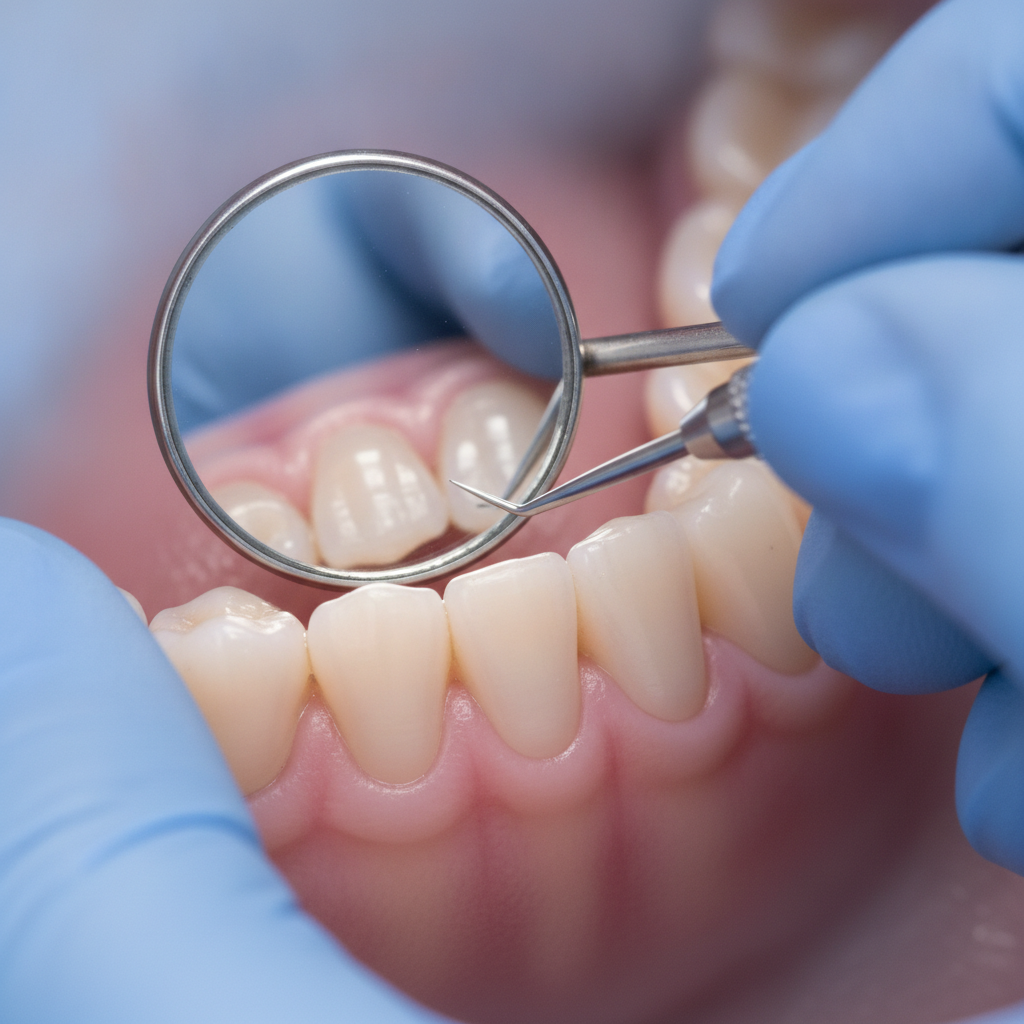
That’s the standard flow. If you come in for a specific problem—like sudden pain or a chipped tooth—we shift into a limited/emergency exam to diagnose and relieve symptoms quickly.
Types of dental exams and common methods
Dental exams vary by purpose: comprehensive for new patients, periodic for routine six‑month checkups, limited for a specific concern, and emergency‑focused for urgent pain or trauma. Each may include X-rays, periodontal charting, oral cancer screening, and fluoride or sealant recommendations.
Exam types you’ll encounter
- Comprehensive exam: Full-mouth assessment for new patients or after a long gap, with baseline X-rays and periodontal charting.
- Periodic exam: Routine check every six months to compare findings and update prevention.
- Limited/problem-focused exam: Targeted to one area causing pain or concern.
- Emergency exam: Rapid assessment to control pain, infection, or injury and coordinate care.
Common methods and tools
- X-rays: Bitewing, periapical, or panoramic images to reveal decay, bone levels, or root issues.
- Periodontal charting: Measuring gum pockets and bleeding points to track gingivitis or periodontitis.
- Intraoral photos: Helpful for showing wear, fractures, or plaque retention areas.
- Risk-based prevention: Fluoride and sealants where risk is higher (kids, teens, high-sugar diets, dry mouth).
Quick comparison
| Exam type | When it’s used | Typical components | Outcome |
|---|---|---|---|
| Comprehensive | New patient or long gap | Full charting, X-rays, cleaning, screening | Baseline plan and home routine |
| Periodic | Six‑month check | Compare changes, refresh cleaning | Adjust prevention and timing |
| Limited | One issue or tooth | Focused exam and X-ray | Diagnosis and next steps |
| Emergency | Pain, swelling, or trauma | Rapid assessment and relief | Stabilize and coordinate care |
Unsure which visit you need? Call us and describe your symptoms or goals. We’ll match you to the right appointment type and length.
Best practices before and after your dental exam
Arrive with your medications list and any dental devices, brush and floss as usual, and tell us about sensitivity, clenching, or smile goals. After your visit, follow personalized home tips, schedule your next checkup, and call promptly if sensitivity or swelling appears.
Before your appointment
- Gather essentials: Medications list, previous dental notes if you have them, and your nightguard or retainer.
- Brush and floss: Maintain your normal routine; don’t over-brush right before.
- Note concerns: Sensitivity, bleeding, jaw clicking, or esthetic goals like whitening.
- Eat normally: A balanced meal prevents lightheadedness during longer visits.
After your appointment
- Follow your plan: Use the brush, floss, or interdental picks we recommended.
- Fluoride timing: If you received fluoride, follow our guidance before eating or drinking.
- Watch for symptoms: Persistent sensitivity after a deep cleaning? Call us so we can help.
- Book the next visit: Keep six‑month momentum; it’s easier than starting over.
Checklists by life stage
- Kids and teens: Sealants for molars; sports mouthguards; aligner hygiene tips.
- Adults: Stress-related clenching review; whitening timing before events; floss solutions.
- Seniors: Dry mouth management; denture care; medication side effect review.
We build plans that fit real routines. Five perfect days beat one intense weekend—that’s how habits stick.
Tools and resources that support your exam results
Simple tools—soft-bristle brushes, fluoride toothpaste, floss or interdental picks, and optional mouthwash—extend the benefits of your exam. Add a one-minute nightly routine review and you’ll keep plaque low, breath fresh, and enamel resilient between professional cleanings.
- Brush: Soft bristles, gentle circles along the gumline, two minutes.
- Floss/picks: Clean contact points where brushes can’t reach.
- Fluoride toothpaste: Remineralizes enamel and reduces sensitivity.
- Mouthwash (optional): Choose alcohol‑free if you struggle with dry mouth.
- Nightguard: If you grind or clench, it protects enamel and jaw joints.
Want a deeper dive into routine care? Explore this piece on the importance of regular dental checkups. If you’re curious about sealants for kids, this clear‑cut guide to dental sealants explains how they protect deep grooves. And this overview on regular dental examinations reinforces why prevention wins.
Case studies and real Scarborough examples
Small, consistent actions change outcomes. These Scarborough scenarios show how early exams, targeted cleanings, and simple home tweaks prevent emergencies, protect comfort, and build smile confidence for kids, busy adults, and seniors.
Busy parent near Warden Sheppard Plaza
- Concern: Coffee stains and sensitivity on upper molars.
- Exam found: Early enamel wear and nighttime clenching.
- Plan: Professional cleaning, desensitizing fluoride, and a nightguard; whitening timed before a big event.
- Outcome: Sensitivity dropped; stains under control; smile photo‑ready.
Teen athlete after practice at Wishing Well Park
- Concern: Chipped incisor from a pickup game.
- Exam found: Minor edge chip, no nerve involvement.
- Plan: Limited exam, X‑ray, smooth and polish the chip; custom mouthguard; sealants on molars.
- Outcome: Protected teeth and fewer urgent visits during the season.
Grandparent caring for grandkids
- Concern: Bleeding gums and dry mouth from new medications.
- Exam found: Early gum inflammation and plaque retention in back teeth.
- Plan: Professional cleaning, interdental brushes, alcohol‑free rinse, and moisture tips.
- Outcome: Healthier gums and easier daily care.

Want a calmer, clearer checkup? Let’s map a plan that fits your routine. New patients are welcome at our Scarborough clinic. Reach out and we’ll help you schedule your dental exam and cleaning together.
Local exam checklist for Scarborough families
Plan dental exams around school terms, sports seasons, and commute times. Bring mouthguards, retainers, or nightguards to visits, and time whitening before milestone events. For urgent issues, call promptly so we can triage and book you fast.
Local considerations for Scarborough
- Schedule kids’ periodic exams before tryouts at Wishing Well Park to check fit on sports mouthguards and review concussion‑safe protocols.
- Before busy shopping weekends near Warden Sheppard Plaza, line up family hygiene visits so you’re set for photos and gatherings.
- If you commute across Sheppard Ave East, ask for early‑morning or late‑day slots to reduce time away from school or work.
How exams connect to cleaning, whitening, and restorative care
Exams guide timing for professional cleanings, whitening, and restorative work. We treat active disease first, then schedule esthetics and long‑term protection like sealants, nightguards, or crowns and bridges when indicated for strength and function.
Prevention first
- Teeth cleaning: Smooths surfaces, cuts plaque, and makes home care easier.
- Fluoride and sealants: Target higher‑risk areas to reduce future decay.
Confidence and comfort
- Professional teeth whitening: Best timed when gums are calm and plaque is low.
- Sensitivity review: Desensitizing agents or home routines to keep you comfortable.
Structural protection
- Fillings and restorations: Onsite dentist addresses cavities and fractures.
- Crowns and bridges: Reinforce weak teeth and replace missing ones for stable chewing.
Everything ladders up to a simpler, more sustainable routine. That’s the win.
Frequently Asked Questions
Most patients benefit from a dental exam every six months, though timing can shift with risk, age, and medical factors. Exams include an oral evaluation, X‑rays when appropriate, cleaning, and screening, with a personalized prevention plan to keep results strong at home.
How often should I get a dental exam?
For many people, every six months works well. If you have a history of gum disease, frequent cavities, braces, or medical changes, we may recommend a different interval. We’ll personalize the schedule so prevention stays on track.
What happens during a routine checkup?
We review your health history and goals, examine teeth and gums, take X‑rays if needed, complete a professional cleaning, and perform an oral cancer screening. You’ll leave with clear home tips and a plan for your next visit.
Are dental X‑rays safe?
Modern dental X‑rays use very low exposure and are taken only when clinically helpful. We use protective measures and choose the smallest set of images that will answer the diagnostic question.
Can kids get sealants during the exam visit?
Often, yes. If molars have deep grooves and the gums are healthy, placing sealants during the same appointment is efficient. We’ll confirm readiness during the exam and coordinate with your hygiene visit.
Key takeaways
Dental exams are preventive powerhouses: they catch issues early, guide cleanings and protection like fluoride or sealants, and keep your routine realistic. When visits are consistent, your risk drops, comfort rises, and smile confidence follows.
- Exams are the roadmap for prevention, comfort, and confidence.
- Six‑month rhythm helps kids, adults, and seniors stay on track.
- Small home tweaks compound results between visits.
- Urgent concerns? Ask for a limited or emergency exam right away.
Conclusion
The best time to protect your smile is before problems start. Book a dental exam that pairs early detection with simple, sustainable habits. Our Scarborough team keeps visits calm, clear, and family‑friendly—so prevention actually fits your life.
Ready to make prevention your advantage? We’ll help you set a schedule that works, from kids’ sealants and sports mouthguards to adult whitening and restorative planning when needed. New patients are always welcome.
Next step: Book your dental exam and cleaning together so habits stick and results last.